The Spark Behind Project Spark
Physics and Math often carry an unfortunate reputation- they're seen as difficult, boring or ‘not for everyone.’ As someone who absolutely loves both subjects, I couldn’t ignore how common this feeling was. Whether it was friends at school or kids I met while volunteering, I saw many students give up on Science and Math simply because they were afraid of it, or because it felt too abstract and disconnected from everyday life.
What truly struck me, though, was the situation in under-resourced schools and NGOs. Even when teachers wanted to make these subjects exciting and relatable, they simply didn’t have the tools or materials to demonstrate how Physics and Math actually work in the real world.
That’s when the idea for Project Spark began.
Phase 1: Learning by Doing (and Failing)
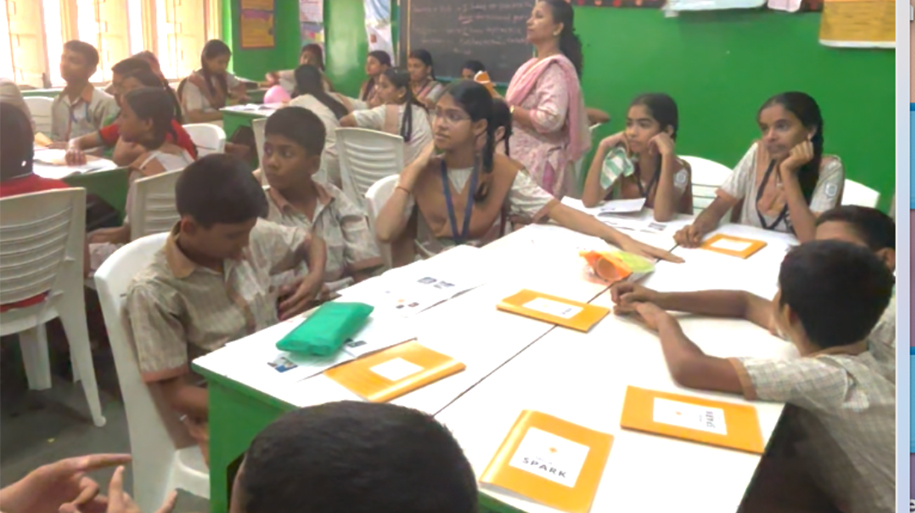
I started small with three experiments and four or five workshops. The kids were engaged and curious, but the experiments were time-consuming, slightly expensive and each one only covered one or two concepts. It wasn’t scalable, and I realized that if I wanted to reach more kids effectively, something had to change.
Phase 2: Simplifying Without Compromising
I started tweaking the experiments. Could we simplify the experiments and add more concepts? I designed an instruction booklet and created kits containing a few more simple experiments. Now the experiments were fun and quick but I still felt something was missing.
Phase 3: Building Independence and Accessibility
As the workshops grew in popularity, I started thinking- what about students who live outside Mumbai? What about teachers who might want to replicate this on their own? I realized that the more handy the experiments were, the more likely it was that kids would try them on a quiet afternoon, just for fun.
So, I simplified the experiments into a full-colour, kid-friendly textbook- complete with step-by-step guides, real-life examples to show how concepts work in everyday situations and reflection questions to spark deeper thinking.
To take it further, I recorded YouTube videos demonstrating each experiment and added QR codes in the book for quick access. Now kids could watch, learn and try the experiments on their own, anywhere, anytime.
Today: A Growing Movement
What started with a few workshops has now reached over 700 kids across 14 schools and NGOs. More than 1,000 interactive booklets have been distributed and the YouTube channel continues to grow with each video making Science more accessible. Project Spark was born out of frustration- but it has grown into a movement of possibility, I plan to reach 4000 more kids through my fundraiser and have created a digital platform to make sure science learning never stops, no matter where a child lives. On it, anyone can download the Project Spark textbook PDF, watch experiment videos and try everything at home using basic materials. There is no barrier, no fancy setup- just curiosity and a spark of interest. Because every child, no matter where they are, deserves the chance to see just how magical and relevant Science truly is.